
St. Clair County Parole vs Probation
Parole and probation are both supervision, but they start from different legal points. Parole usually follows a state-prison sentence after the Alabama Board of Pardons and Paroles grants release or after a mandatory-release process moves the person from prison custody to supervision. Probation usually comes from the sentencing court instead of a prison release. In St. Clair County, that distinction matters because a person released from St. Clair County Jail on bond may have no Alabama Bureau of Pardons and Paroles record, while a person released from St. Clair Correctional Facility may have a local ABPP reporting office.
A sheriff released-roster entry should not be read as proof that supervision exists or has ended. The St. Clair County Jail roster can show a release date, booking number, booking date, charges, bond, and booking photo for a recent jail release. It does not always label the release reason. A charge line such as a probation violation or sanction can give context, but the court record and supervision office are the better sources for whether a person remains under terms, has a revocation issue, or has completed supervision.
| Record type | What it usually means | Where to verify in St. Clair County |
|---|---|---|
| Parole | Release from an Alabama prison before the sentence fully ends, subject to board conditions. | Alabama Bureau of Pardons and Paroles, hearing results, and the local field office. |
| Probation | A court-ordered sentence or part of a sentence served under supervision outside jail or prison. | St. Clair County court records, ABPP field offices, or Community Corrections when ordered. |
| Mandatory release | A statutory move from ADOC custody to supervision before the sentence end for eligible inmates. | ADOC, Alabama VNS, ABPP, and the assigned local supervision office. |
- Absconder
- A supervised person who has stopped reporting or whose location is not known to the supervising authority.
- Revocation
- A court or board action that can return a person to custody after a proven violation.
- Discharge
- The end of a supervision term after the person has completed the required period or the authority closes the case.
Verify St. Clair County Supervision
The most reliable path starts with the custody type. A person booked into the county jail on a new local charge may be released on bond or court order without becoming an ABPP supervisee. A person serving an ADOC sentence may move to parole, mandatory release, or end-of-sentence discharge. A person sentenced in St. Clair County Circuit or District Court may be placed on probation, community corrections, or a short jail sanction. Those paths can overlap, so use more than one source when the jail roster and the court record do not tell the same story.
- Check the St. Clair County released inmates search path first if the question is whether the person left St. Clair County Jail.
- Search the Alabama Bureau of Pardons and Paroles hearing and result pages when the person was serving a state-prison sentence.
- Read the St. Clair County court case for sentencing, probation, revocation, bond, dismissal, or case-action history.
- Use the Pell City or Ashville ABPP field office when the person is assigned to local parole, probation, or mandatory-release supervision.
- For custody-change alerts tied to an ADOC-sentenced offender, use VINELink Check or Alabama VNS as a notification layer.
The ABPP current-year results page adds an important caution. When a parole result includes a reset date, that reset is the first month and year the person may be considered for placement on a later docket. It is not a new release date and not always a scheduled hearing date. Special parole conditions are found in the minutes for the hearing date, so a result entry may need the minutes to understand the terms.
St. Clair County ABPP Offices
St. Clair County has two Alabama Bureau of Pardons and Paroles field offices. The Pell City office is listed as the main office serving St. Clair County, and the Ashville office also serves St. Clair. This gives residents two local reporting and contact points rather than one distant regional location. The office match can depend on the person's assigned supervision area, court order, and ABPP case routing.
The ABPP Pell City Field Office page and the ABPP Ashville Field Office page are the source pages for these local supervision contacts. Use them for parole, probation, and mandatory-release questions after a state-prison release or a court supervision order. They are not jail roster pages and should not be used as the first source for a recent pretrial release from St. Clair County Jail.
Alabama Bureau of Pardons and Paroles, Pell City Field Office
111 20th Street North
Pell City, AL 35125
Main St. Clair County office
Alabama Bureau of Pardons and Paroles, Ashville Field Office
35755 US Hwy 231
Ashville, AL 35953
Serves St. Clair County
The Pell City office screenshot in the manifest comes from the official ABPP location page.
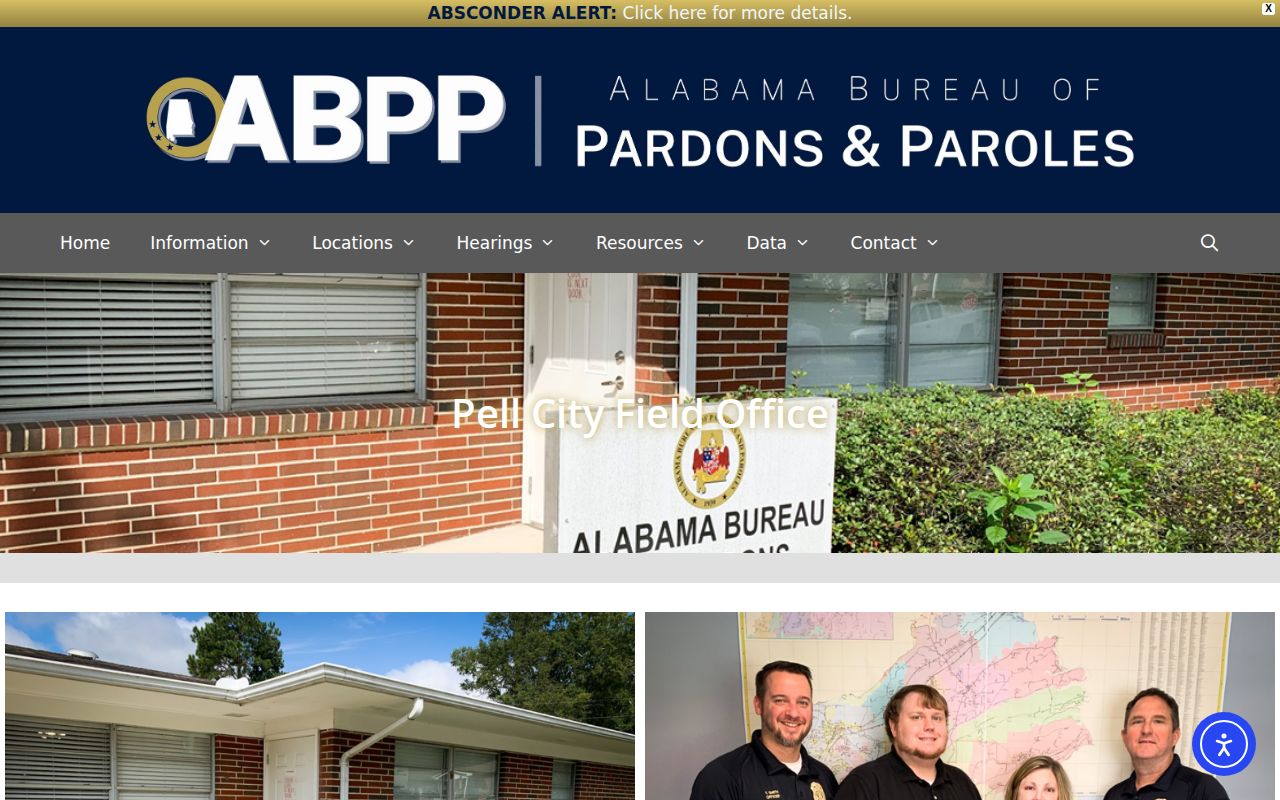
That source supports the local routing point for St. Clair County parole and probation verification.
Note: If a person is only on bond in a pending county case, ABPP may not be the supervising agency.
Why Two St. Clair Offices Matter
The two-office setup is a distinctive St. Clair County supervision detail. ABPP has written that the Pell City and Ashville offices together provide convenient access for local probationer and parolee needs. For a released state-prison inmate who must report after leaving custody, that detail is practical. It narrows the next step from a statewide agency name to a local office in the correct part of the county.
This two-office map also helps when a jail release follows a probation or parole sanction. A St. Clair County Jail release timestamp may show that a sanction period ended, but it does not show that the underlying supervision term ended. The person may need to resume reporting, comply with conditions, attend treatment, pay court obligations, or wait for a later court or board action. The local ABPP office can confirm supervision routing when ABPP has the case.
St. Clair County Parole Records
Parole hearing records are useful before and after a prison release. ABPP publishes scheduled parole hearings, hearing cancellations, current-year parole results, and previous-year results. These sources can show whether a hearing was set, cancelled, granted, denied, continued, or reset. They do not replace the court file for a county sentence, and they do not prove a recent jail bond release.
Alabama parole eligibility is calculated under Ala. Code 15-22-28. ABPP says sentence length, offense type, jail credit, good-time eligibility, time served, and sentencing-court orders can affect the set date. For listed Class A felonies committed on or after March 21, 2001, the statute uses an 85-percent or 15-year parole consideration rule. Other prisoners have different consideration timing. A consideration date is not a promise of release.
Important: A parole result, jail release date, and probation case status can point to different legal events. Use the source that matches the event being verified.
St. Clair County Violations
Supervision conditions can include reporting, treatment, no-contact terms, payment duties, residence rules, travel limits, and other terms set by the court or parole board. A violation means the supervising authority alleges that a condition was broken. A revocation means a court or board has acted on that violation in a way that may return the person to custody. An absconder status means the person is not reporting or cannot be located by supervision staff.
For St. Clair County release verification, violation language should be handled with care. The sheriff roster may show a booking tied to a probation violation, failure to appear, or short sanction, but that does not explain the final outcome. The court case action summary, ABPP records, and hearing results explain the legal step. If the person was released from jail after a sanction, the release date confirms the jail event while the supervision office confirms whether reporting continues.
St. Clair County Release Funds
The jail release-funds policy also affects people leaving custody who may then report to supervision. The St. Clair County Sheriff's Office Corrections page says that upon release, remaining inmate account funds are provided on a debit card or in the form of a check. It also lists a contact for questions about that policy and gives separate instructions for release funds from another agency.
This detail does not prove parole or probation status. It is a release logistics point. A person may need funds, property, identification, a ride, and reporting instructions at the same time, but each item comes from a different source. Funds and property are jail administrative matters. Reporting terms come from ABPP, court orders, or Community Corrections. Court obligations and case status come from the clerk or court record.
Ending St. Clair County Supervision
Supervision ends when the responsible authority closes or discharges the case, not merely when a person leaves jail. For parole, ABPP or the board process controls the record. For probation, the sentencing court and supervising agency record matter. For mandatory release, ADOC determines the release date and coordinates with ABPP for the supervision period before sentence end. A local jail release can be part of the story, especially after a sanction, but it is not the discharge document.
Alabama mandatory release under ABPP's explainer applies to eligible offenses committed on or after January 30, 2016, with exclusions for child-involved sex offenses and life sentences. The explainer describes supervision windows before end of sentence based on sentence length. St. Clair County users should treat that date as a state-prison supervision mechanism, not a county-jail release timestamp. When the question is whether a person is fully discharged, request the supervision record or read the court and ABPP sources that show closure.